The days of the week in Hebrew
The days of the week in Hebrew are numbered. Sunday to Friday are "first day" to "sixth day", and Saturday is Shabbat, the day of rest. Yom means day. Tap a day to hear it.
- יום ראשוןSunday · First day · say: yom ree-SHON
- יום שניMonday · Second day · say: yom sheh-NEE
- יום שלישיTuesday · Third day · say: yom shlee-SHEE
- יום רביעיWednesday · Fourth day · say: yom reh-vee-EE
- יום חמישיThursday · Fifth day · say: yom kha-mee-SHEE
- יום שישיFriday · Sixth day · say: yom shee-SHEE
- יום שבתSaturday · Shabbat, the day of rest. Most people just say shabbat · say: yom sha-BAT
If you know the Hebrew words for first through sixth, you already know most of the day names. Below you will find how the names are built, what Shabbat means and how the Israeli week works, the letters in these names, and 35 words and phrases for talking about days and times, each with audio. Then you can practice with flashcards, a speaking check, a short conversation and a quiz.
How the Hebrew day names are built
Each name from Sunday to Friday is yom (day) plus an ordinal number: first, second, third and so on. So Monday, yom sheni, is literally "second day". The week starts on Sunday because Shabbat is the seventh day in Jewish tradition.
Count from Sunday
Tap the ordinal, then the day name that uses it.
- ראשוןfirst · say: ree-SHONיום ראשוןSunday · say: yom ree-SHON
- שניsecond · say: sheh-NEEיום שניMonday · say: yom sheh-NEE
- שלישיthird · say: shlee-SHEEיום שלישיTuesday · say: yom shlee-SHEE
- רביעיfourth · say: reh-vee-EEיום רביעיWednesday · say: yom reh-vee-EE
- חמישיfifth · say: kha-mee-SHEEיום חמישיThursday · say: yom kha-mee-SHEE
- שישיsixth · say: shee-SHEEיום שישיFriday · say: yom shee-SHEE
In everyday speech, people often drop yom. A friend might use just beh-shlee-SHEE (on Tuesday) when saying "see you on Tuesday". Both the long and the short forms are correct.
In writing, days are often shortened to a Hebrew letter that stands for a number: יום א׳ is Sunday, יום ב׳ is Monday, and so on up to יום ו׳ for Friday. Opening hours such as א׳-ה׳ mean Sunday to Thursday.
Most of these numbers look like the counting numbers: shlishi (third) is close to shalosh (three), and khamishi (fifth) to khamesh (five). Rishon (first) is the odd one out. It comes from rosh (head), not from the word for one. Arabic day names also count Sunday as the first day, and the Arabic word for Saturday is related to shabbat. See the days of the week in Arabic to compare.
Shabbat and the Israeli week
Saturday is not a number. Shabbat comes from the Hebrew root ש-ב-ת, which has to do with stopping and resting. The English word Sabbath comes from it. Shabbat begins by sunset on Friday and ends after dark on Saturday.
Words for Shabbat
Tap to hear each one.
- שבתShabbat, Saturday · say: sha-BAT
- שבת שלוםShabbat shalom, a peaceful Shabbat · say: sha-BAT sha-LOM
- ערב שבתthe eve of Shabbat, Friday · say: EH-rev sha-BAT
- מוצאי שבתSaturday night, after Shabbat ends · say: mo-tsa-EY sha-BAT
- שבוע טובHave a good week · say: sha-VU-a TOV
Shabbat shalom is a common greeting on Friday and during Shabbat. Erev shabbat is the eve of Shabbat, meaning Friday and especially the hours before sunset. Erev is also the everyday word for evening. Once Shabbat is over on Saturday night, called motsa'ei shabbat, people wish each other shavua tov, a good week.
In Israel, the usual workweek runs from Sunday to Thursday. Many people have Friday off or work a short day, and many shops close early on Friday. The weekend, sof shavua, is Friday and Saturday.
A normal week in Israel
The Hebrew letters in the day names
Hebrew is written from right to left. Some letters in these names sound like their English partners, such as נ (n), ל (l) and מ (m). These ten need a closer look. Tap a letter to see how it sounds and hear it in a word.
Tap a letter to hear it
Each letter plays an example word.
Hebrew is normally written without vowel marks (niqqud). You often see the dots and dashes in children's books, poetry, prayer books and learner books. They are rare in newspapers, signs and text messages. This page leaves them out too, so the words look the way you will meet them in Israel. The letters ו and י often stand in for vowels, and the respellings give you the rest.
In the respellings, capitals show the stressed syllable. Most of these words stress the last syllable, as in ree-SHON and sha-BAT. A few stress an earlier one: sha-VU-a (week), BO-ker (morning), EH-rev (evening) and LAI-la (night).
Days and time words in Hebrew
Pick a group and tap the speaker to hear a word. Switch on Hide English to test yourself. The days and the times of day come from Lexora's A1 course for Hebrew. The other two groups add the words you need to make plans.
35 Hebrew words and phrases for days and times
- יום שניsay: yom sheh-NEE
- יום שלישיsay: yom shlee-SHEE
- יום רביעיsay: yom reh-vee-EE
- יום חמישיsay: yom kha-mee-SHEE
- יום שישיsay: yom shee-SHEE
- יום שבתsay: yom sha-BAT
- יום ראשוןsay: yom ree-SHON
- בוקרsay: BO-ker
- אחר הצהרייםsay: a-KHAR ha-tso-ho-RA-yim
- ערבsay: EH-rev
- לילהsay: LAI-la
- חצותsay: kha-TSOT
- צהרייםsay: tso-ho-RA-yim
- יוםsay: YOM
- שבועsay: sha-VU-a
- שעהsay: sha-AH
- דקהsay: da-KAH
- היוםsay: ha-YOM
- מחרsay: ma-KHAR
- אתמולsay: et-MOL
- מחרתייםsay: makh-ra-TA-yim
- שלשוםsay: shil-SHOM
- השבועsay: ha-sha-VU-a
- בשבוע הבאsay: ba-sha-VU-a ha-BA
- בשבוע שעברsay: ba-sha-VU-a sheh-a-VAR
- סוף שבועsay: sof sha-VU-a
- כל יוםsay: kol YOM
- ביום שניsay: beh-yom sheh-NEE
- בשבתsay: ba-sha-BAT
- כל יום ראשוןsay: kol yom ree-SHON
- בבוקרsay: ba-BO-ker
- בערבsay: ba-EH-rev
- איזה יום היום?say: EY-zeh yom ha-YOM
- היום יום שלישיsay: ha-YOM yom shlee-SHEE
- מתי נפגשים?say: ma-TAI nif-ga-SHEEM
Practice with flashcards
Words stick when you pull them from memory, not when you read a list once. Say each day out loud before you flip the card, then be honest about whether you knew it. A card you miss comes back in the same round.
Seven days, one round
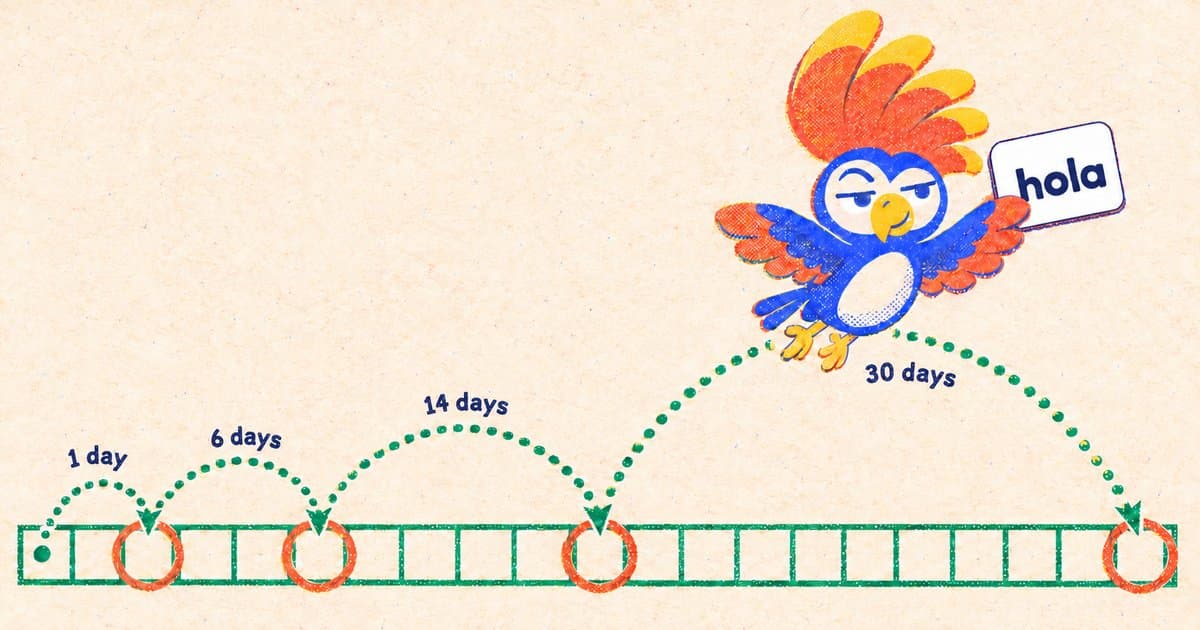
Knowing them today is the easy part. To still know them next month, review them again after a day, then after a week, then after two weeks. Our guide to the spaced repetition schedule explains why those gaps work.
Say them out loud
You know a word when you can say it. Pick one, listen, then press the microphone and say it. Listen for the sh and l together in Tuesday and the two vowel sounds in a row in Wednesday.
Speaking check
Works in Chrome, Edge and Safari. Your browser does the listening, and nothing is sent to Lexora.
Make a plan in Hebrew
Here is how the day names sound in real use. A friend wants to meet up this week. Pick the right reply at each step.
When are we meeting?
- מתי נפגשים?When are we meeting?
Quick quiz
Seven questions on the days and the words around them. A question you miss now tells you what to review tomorrow.
How many do you remember?
Monday or the second day?
The names from Sunday to Friday use ordinals, so the same words can show up in other phrases. The surrounding words help you tell which meaning fits.
- יום שני (yom sheh-NEE): Monday.
- היום השני (ha-YOM ha-sheh-NEE): the second day, as in the second day of a trip. Here ha-yom means "the day", not today.
- שני ימים (shney ya-MEEM): two days. The same letters שני are read shney and mean two.
What to learn next
The days of the week are part of the A1 level, where Hebrew learners start. Here is the rest of the path in Lexora, up to the advanced vocabulary of C2.
Words at each level
The fastest way through it is a few minutes a day. Learn a handful of new words, say them in sentences, and review each one just before you would forget it. The spaced repetition schedule explains the gaps, and our list of spaced repetition apps compares the apps that do the scheduling for you.