The days of the week in Arabic
Five of the Arabic day names are based on numbers. In that traditional count, Sunday is day one and Thursday is day five. The name for Friday comes from a root that means to gather. The name for Saturday is related to the Hebrew word for the Sabbath. Tap a day to hear it.
- الأحدSunday · Day one · say: al-'A-had
- الاثنينMonday · Day two · say: al-ith-NAYN
- الثلاثاءTuesday · Day three · say: ath-thu-la-THAA'
- الأربعاءWednesday · Day four · say: al-'ar-bi-'AA'
- الخميسThursday · Day five · say: al-kha-MEES
- الجمعةFriday · From the root for gathering · say: al-JUM-'a
- السبتSaturday · Related to Sabbath · say: as-SABT
The Arabic day names are easier than they look. Knowing the numbers one to five helps you remember most of the names. Below you will find how the names are built, the few sounds that trip up English speakers, why Friday and Saturday are different, and 35 words and phrases for talking about days and times, each with audio. Then you can practice with flashcards, a speaking check, a short conversation and a quiz.
How the Arabic day names are built
The names from Sunday to Thursday use al- (the) and forms based on numbers. In the traditional count, Sunday is day one, so Monday, al-ithnayn, comes from the word for two. You can put yawm (day) first, as in yawm al-ithnayn. The day name also works on its own.
Count from Sunday
Tap the number, then the day made from it.
- واحدone · say: WAA-hidالأحدSunday · say: al-'A-had
- اثنانtwo · say: ith-NAANالاثنينMonday · say: al-ith-NAYN
- ثلاثةthree · say: tha-LAA-thaالثلاثاءTuesday · say: ath-thu-la-THAA'
- أربعةfour · say: AR-ba-'aالأربعاءWednesday · say: al-'ar-bi-'AA'
- خمسةfive · say: KHAM-saالخميسThursday · say: al-kha-MEES
Sunday is the one that does not quite match. It uses ahad, another word for one that you also hear in ahad 'ashar (eleven). The everyday counting word is wahid.
The standard spelling of Monday is الاثنين. The alif after the l in al- is written without a hamza mark.
The Arabic sounds in the day names
A handful of sounds in these seven names have no English match. Tap a letter to see how it sounds and hear it in a word.
Tap a letter to hear it
Each letter plays an example word.
In the respellings on this page, capitals show the stressed syllable. An apostrophe (') can mark the brief stop in ء or the deeper throat sound in ع. Hold a doubled sound a little longer, as in ath-thu. Read th as in "think", dh as in "this", aw as in "cow" and ay like the vowel in "eye". The q sounds like a k made farther back in the mouth.
The last syllable takes the stress in al-kha-MEES, al-ith-NAYN and ath-thu-la-THAA'. It comes earlier in al-'A-had and al-JUM-'a. The prefix al- is unstressed.
Friday, Saturday and the weekend
The last two days are not numbers. Al-jum'a (Friday) comes from a root that means to gather. Around midday on Friday, Muslims gather for the weekly congregational prayer, salat al-jum'a. The same root gives جامع (jaami', a congregational mosque) and جامعة (jaami'a, a university).
As-sabt (Saturday) is related to Hebrew shabbat, the source of the English word Sabbath.
Friday and Saturday are the usual weekend in Saudi Arabia, Egypt, Jordan and Qatar. Saudi Arabia switched from Thursday and Friday to Friday and Saturday in 2013. At the start of 2022, UAE federal offices moved to Saturday and Sunday, with a short workday on Friday. Sharjah government offices take Friday through Sunday off. Morocco's government offices close on Saturday and Sunday.
Days off in a normal week
Days and time words in Arabic
Pick a group and tap the speaker to hear a word. Switch on Hide English to test yourself. The days and the times of day come from Lexora's A1 course for Arabic. The other two groups add the words you need to make plans.
35 Arabic words and phrases for days and times
- الاثنينsay: al-ith-NAYN
- الثلاثاءsay: ath-thu-la-THAA'
- الأربعاءsay: al-'ar-bi-'AA'
- الخميسsay: al-kha-MEES
- الجمعةsay: al-JUM-'a
- السبتsay: as-SABT
- الأحدsay: al-'A-had
- صباحsay: sa-BAAH
- بعد الظهرsay: ba'd az-ZUHR
- مساءsay: ma-SAA'
- ليلsay: LAYL
- منتصف الليلsay: MUN-ta-saf al-LAYL
- ظهرsay: ZUHR
- يومsay: YAWM
- أسبوعsay: us-BOO'
- ساعةsay: SAA-'a
- دقيقةsay: da-QEE-qa
- اليومsay: al-YAWM
- غداsay: GHA-dan
- أمسsay: AMS
- بعد غدsay: BA'-da GHAD
- أول أمسsay: AW-wal 'AMS
- كل يومsay: kull YAWM
- هذا الأسبوعsay: HAA-dhal-'us-BOO'
- الأسبوع القادمsay: al-'us-BOO' al-QAA-dim
- الأسبوع الماضيsay: al-'us-BOO' al-MAA-di
- عطلة نهاية الأسبوعsay: 'UT-lat ni-HAA-yat al-'us-BOO'
- يوم الاثنينsay: yawm al-ith-NAYN
- يوم الجمعةsay: yawm al-JUM-'a
- كل يوم جمعةsay: kull yawm JUM-'a
- صباح السبتsay: sa-BAAH as-SABT
- ليلة الجمعةsay: LAY-lat al-JUM-'a
- أي يوم اليوم؟say: AYY yawm al-YAWM
- اليوم الخميسsay: al-YAWM al-kha-MEES
- متى نلتقي؟say: MA-taa nal-TA-qee
- سأسافر يوم الجمعة (sa-'u-SAA-fir yawm al-JUM-'a): I will travel on Friday.
- المتحف مغلق يوم الاثنين (al-MAT-haf MUGH-laq yawm al-ith-NAYN): The museum is closed on Monday.
Practice with flashcards
Words stick when you pull them from memory, not when you read a list once. Say each day out loud before you flip the card, then be honest about whether you knew it. A card you miss comes back in the same round.
Seven days, one round
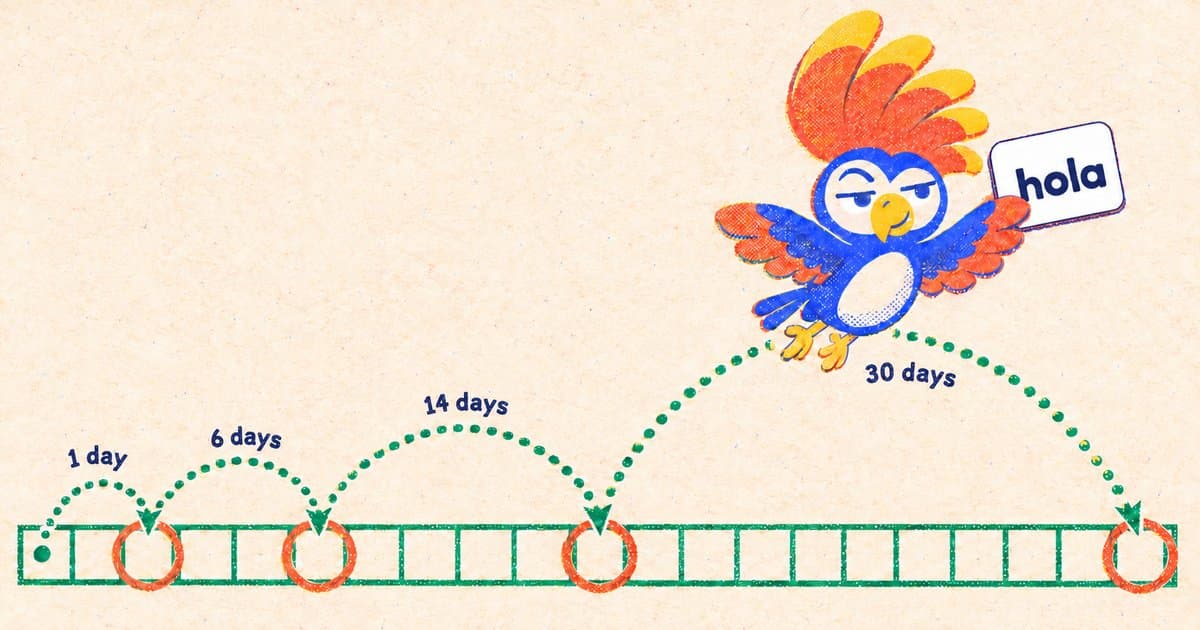
Knowing them today is the easy part. To still know them next month, review them again after a day, then after a week, then after two weeks. Our guide to the spaced repetition schedule explains why those gaps work.
Say them out loud
You know a word when you can say it. Pick one, listen, then press the microphone and say it. Tuesday and Wednesday are the hardest, so start there.
Speaking check
Works in Chrome, Edge and Safari. Your browser does the listening, and nothing is sent to Lexora.
Make a plan in Arabic
Here is how the day names sound in real use. A friend wants to meet up this week. Pick the right reply at each step.
When shall we meet?
- متى نلتقي؟When shall we meet?
Quick quiz
Seven questions on the days and the words around them. A question you miss now tells you what to review tomorrow.
How many do you remember?
Days of the week in spoken Arabic
This page uses Modern Standard Arabic, the Arabic of news, books and signs. In everyday conversations, people often use local forms of the day names.
What to learn next
The days of the week are part of the A1 level, where Arabic learners start. Here is the rest of the path in Lexora, up to the advanced vocabulary of C2.
Words at each level
The fastest way through it is a few minutes a day. Learn a handful of new words, say them in sentences, and review each one just before you would forget it. The spaced repetition schedule explains the gaps, and our list of spaced repetition apps compares the apps that do the scheduling for you.