The first 12 Vietnamese greetings to learn
Hello in Vietnamese is xin chào (sin chow). In everyday life people often say chào and a word that fits their relationship to the person. Say chào bạn to a peer, chào anh to a man a little older, or chào chị to a woman a little older. These are the twelve greetings and polite phrases to learn first. Tap one to hear it.
- xin chàoHello · say: sin chow
- chào bạnHi (to a peer) · say: chow bahn
- chào anhHi (to a man a little older than you) · say: chow eng
- chào chịHi (to a woman a little older than you) · say: chow chee
- tạm biệtGoodbye · say: tahm bee-uht
- hẹn gặp lạiSee you again · say: hen gahp lie
- Bạn khỏe không?How are you? · say: bahn khweh khohng
- Tôi khỏe, cảm ơn.I'm fine, thanks. · say: toy khweh, kahm uhn
- Rất vui được gặp bạn.Nice to meet you. · say: zuht vooy doo-uhk gahp bahn
- cảm ơnThank you · say: kahm uhn
- xin lỗiSorry / excuse me · say: sin loy
- không có gìYou're welcome · say: khohng kaw zee
Vietnamese greetings are short, but they carry one idea English doesn't have: the word for "you" changes with age and relationship. Below you will find who gets which greeting, the six tones, 39 phrases grouped by situation, a chat with an older neighbor, a speaking check and a quiz.
Who are you greeting?
Vietnamese has no single word for "you" that fits everyone. You call people by family words: older brother, older sister, uncle, grandmother. You can use them with strangers too. The choice depends on age and relationship. You also call yourself by the matching word. If you call a man anh (older brother), you can call yourself em (younger sibling). With bà (grandmother), use cháu (grandchild).
One common pattern for a respectful hello is your word, then chào, then their word, then ạ.
- Em chào anh ạ. Hello (from a younger person to a man a little older)
- Cháu chào bà ạ. Hello (to a woman your grandparents' age)
Ạ is a small word that adds respect. It is common with elders, teachers, and customers. In casual greetings to friends or younger people, you can usually leave it off.
| Who you're greeting | What to say |
|---|---|
| A peer around your ageThey are bạn, you are tôi or mìnhClose friends often use each other’s names or other familiar terms | chào bạnsay: chow bahn |
| A man a little older than youThey are anh, you are emChào anh on its own is fine too | Em chào anh ạ.say: em chow eng ah |
| A woman a little older than youThey are chị, you are emChào chị on its own is fine too | Em chào chị ạ.say: em chow chee ah |
| Someone a little younger than youThey are em, you are anh or chịCall yourself anh if you are a man, chị if you are a woman | chào emsay: chow em |
| A man around your parents’ age, usually younger than themThey are chú, you are cháu | Cháu chào chú ạ.say: chow chow choo ah |
| A woman around your parents’ age, usually younger than themThey are cô, you are cháu | Cháu chào cô ạ.say: chow chow koh ah |
| Someone of your parents’ generation who is older than themThey are bác, you are cháuBác is for men and women | Cháu chào bác ạ.say: chow chow bahk ah |
| A man about your grandparents' ageThey are ông, you are cháu | Cháu chào ông ạ.say: chow chow ohng ah |
| A woman about your grandparents' ageThey are bà, you are cháu | Cháu chào bà ạ.say: chow chow bah ah |
| Your teacher, a womanThey are cô, you are emCô giáo means a female teacher. Address her as cô | Em chào cô ạ.say: em chow koh ah |
| Your teacher, a manThey are thầy, you are em | Em chào thầy ạ.say: em chow tuhy ah |
| A group of peopleThey are mọi người, you are tôiMọi người means everyone. Các bạn works when addressing a group of peers | chào mọi ngườisay: chow moy ngoo-uhy |
Vietnamese people may ask your age soon after you meet to help choose the right word. If you are unsure, xin chào is a general greeting. Swedish goes the other way: everyone is du, from a child to your boss, as our list of basic Swedish phrases explains.
Pick the right word
Four people, four greetings.
Vietnamese tones and sounds
Hanoi Vietnamese has six tones. Tones can change in pitch or in how tight your voice sounds. Five have marks above or below the vowel. The level tone has no tone mark. Changing the tone can change the meaning. Here is one syllable, ma, with all six.
Tap a tone to hear it
The respellings on this page can't show tones, so listen for them here.
Tones matter in greetings too. Chào (hello) falls to a low pitch. Say it with a rise to a high pitch and it becomes cháo, rice porridge. With the hook on top, chảo is a frying pan. People will usually understand you from the situation, but the tone is part of the word.
- chàoHi / bye
- cháoRice porridge
- chảoFrying pan
Vietnamese is written in the Latin alphabet, but some letters and letter pairs sound different from English. You can hear examples below.
Tap a letter to hear it
Each button plays a word or phrase with the sound.
The lowercase respellings give a rough guide to Hanoi pronunciation. In chow, zow, now, and sow, the ow rhymes with cow. In eng, use the e in bed and the ng in sing. For oo in moong, too-uhng, and the other examples with ư, keep your lips unrounded. Say sounds joined by a hyphen as a quick glide within one syllable. Keep the vowel in cháu shorter than in chào. In the South you will hear a few differences.
- d and gi usually sound like y, so dạ is yah and không có gì ends in yee.
- The hỏi and ngã tones usually sound the same.
- Anh often ends closer to the n in ahn than to the ng-like ending you hear in Hanoi.
Vietnamese greetings and phrases by situation
Pick a situation, tap the speaker to hear a phrase, and switch on Hide English to test yourself. Lexora's A1 course for Vietnamese includes ten of these: xin chào, chào, tạm biệt, chào mừng, cảm ơn, làm ơn, xin lỗi, không có gì, vâng and không.
39 Vietnamese greetings and polite phrases
- xin chàosay: sin chow
- chàosay: chow
- chào bạnsay: chow bahn
- chào anhsay: chow eng
- chào chịsay: chow chee
- chào emsay: chow em
- chào mọi ngườisay: chow moy ngoo-uhy
- chào mừngsay: chow moong
- tạm biệtsay: tahm bee-uht
- hẹn gặp lạisay: hen gahp lie
- Lâu rồi không gặp!say: luhw zoy khohng gahp
- Bạn khỏe không?say: bahn khweh khohng
- Dạo này bạn thế nào?say: zow nigh bahn teh now
- Tôi khỏe, cảm ơn.say: toy khweh, kahm uhn
- Còn bạn?say: kawn bahn
- Bình thường.say: bing too-uhng
- Tôi không khỏe lắm.say: toy khohng khweh lahm
- cảm ơnsay: kahm uhn
- cảm ơn nhiềusay: kahm uhn nyee-uhw
- không có gìsay: khohng kaw zee
- xin lỗisay: sin loy
- không saosay: khohng sow
- làm ơnsay: lahm uhn
- vângsay: vuhng
- dạsay: zah
- cósay: kaw
- khôngsay: khohng
- Tôi không hiểu.say: toy khohng hyee-uhw
- Bạn tên là gì?say: bahn tehn lah zee
- Tôi tên là Anna.say: toy tehn lah an nah
- Rất vui được gặp bạn.say: zuht vooy doo-uhk gahp bahn
- Bạn là người nước nào?say: bahn lah ngoo-uhy noo-uhk now
- Tôi là người Mỹ.say: toy lah ngoo-uhy mee
- Tôi đang học tiếng Việt.say: toy dahng hok tee-uhng vee-uht
- chào buổi sángsay: chow boo-oy sahng
- chúc ngủ ngonsay: chook ngoo ngawn
- chúc mừng năm mớisay: chook moong nahm muhy
- chúc mừng sinh nhậtsay: chook moong sing nyuht
- Ăn cơm chưa?say: ahn kuhm choo-uh
Most phrases with bạn change with the person. Bạn khỏe không? to a peer becomes Anh khỏe không? to a man a little older and Bà khỏe không ạ? to a grandmother. The word for I changes too. Tôi is neutral and can sound distant in close relationships. With family or elders, people often use a family word. Among friends, mình is one option.
Meet your neighbor
Here is how the greetings might sound when you meet someone new. You have just moved into an apartment in Hanoi, and the woman next door is about your grandmother's age. Pick the right reply at each step.
Saying hello to an older neighbor
- Chào cháu!Hello!
Practice with flashcards
You remember phrases by pulling them from memory, not by reading a list once. Say each phrase out loud before you flip the card, then be honest about whether you knew it.
Eight greetings, one round
Say them out loud
You know a phrase when you can say it. Pick one, listen, then press the microphone and say it. Your browser shows you what it heard. Watch the tones.
Speaking check
Works in Chrome, Edge and Safari. Your browser does the listening, and nothing is sent to Lexora.
Quick quiz
Seven questions on the greetings, tones and sounds above. A wrong answer shows you what to review tomorrow.
How many do you remember?
The catch with xin chào
Many phrasebooks teach xin chào as hello, and it is correct. Everyone will understand it. But between friends, family and neighbors it can sound stiff, a bit like a textbook.
- Chào bạn. Hi (to a peer)
- Em chào chị ạ. Hello (to a woman a little older)
- Cháu chào bác ạ. Hello (to someone of your parents’ generation who is older than them)
What to learn next
Greetings are the first step of the A1 level. The chart shows the rest of the path in Lexora, from your first words to the advanced vocabulary of C2.
Words at each level
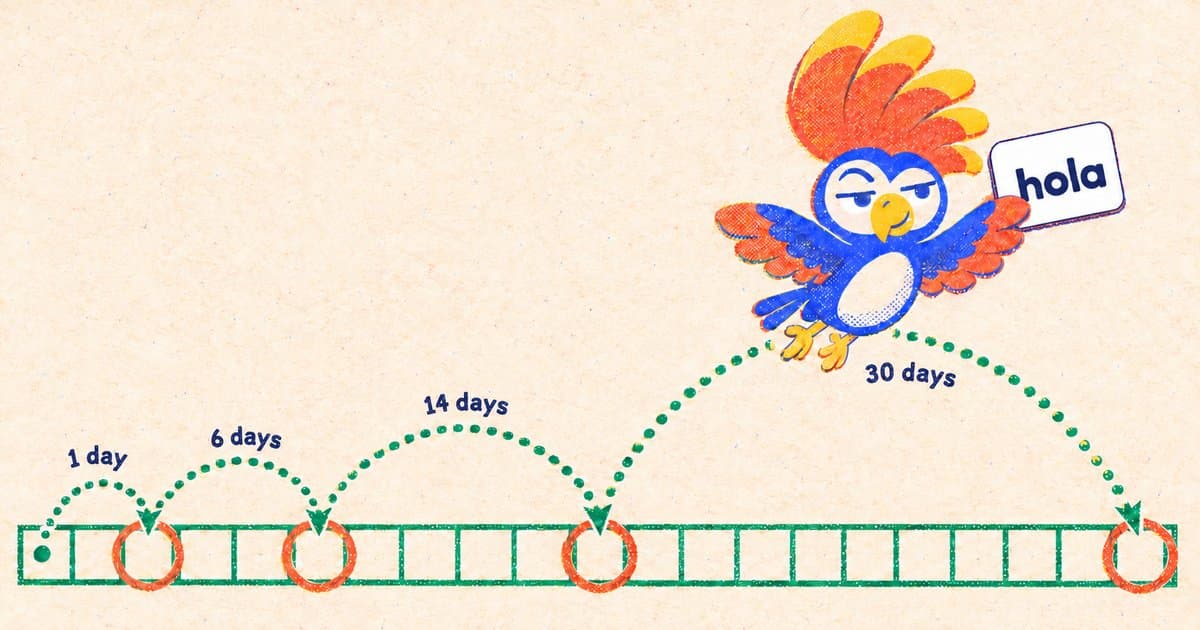
Family words are a good next topic, since they are the words you greet people with. Learn a few new words a day, say them in sentences, and review each one just before you would forget it. Our guide to the spaced repetition schedule explains why the gaps are 1, 6, 14, 30, 60 and 150 days.