Vocabulary apps that make you speak, in short
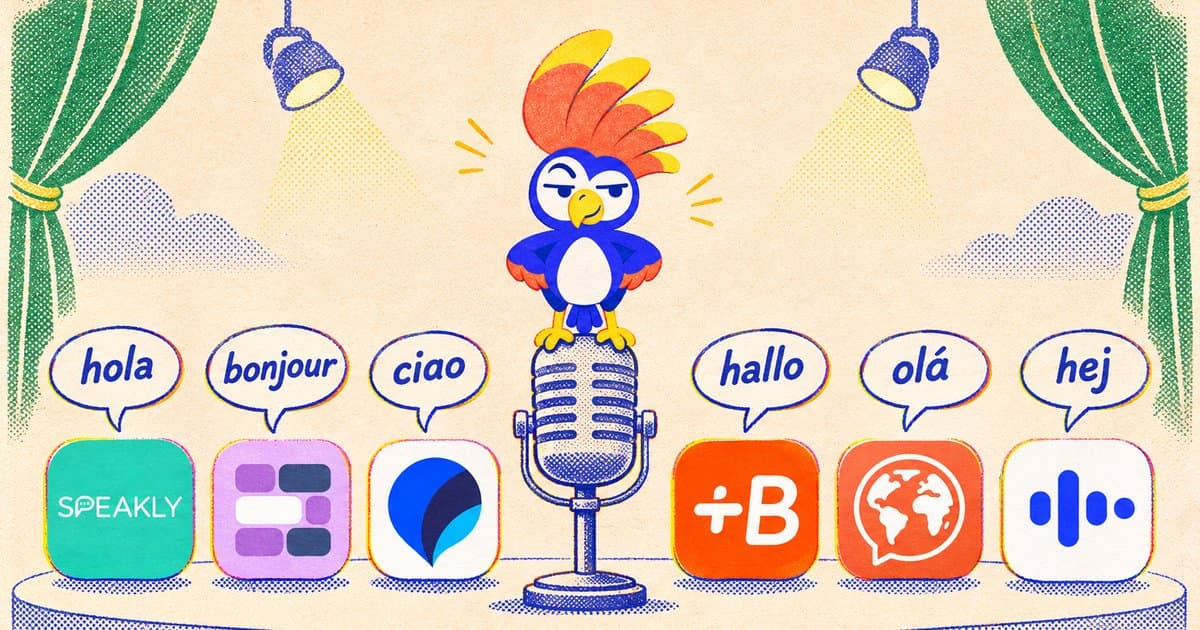
The best speaking vocabulary app depends on how you want to speak. To learn new words by saying them in short sentences, with speech recognition checking each word, use Lexora. To repeat after native audio, use Speechling, where human coaches check you, or Glossika for shadowing. To say the missing word in a sentence, use Lingvist. To say whole sentences from memory, use Grammobolica or Speakly. For open conversation, use Speak or Memrise's AI Buddies.
- Apps compared
- 13
- Use speech recognition
- 9 of 13
- Human coaches
- Speechling
- Cheapest year
- $34.99
- You want to say new words in sentences
 Lexora
- You want a person to hear you
 Speechling
- You want to speak along with native audio
 Glossika
- You want the most common words first
 Lingvist
 Speakly
- You studied before but cannot speak
 Grammobolica
- You want conversation
 Speak
 Pimsleur
 MemriseA tutor
- You want to pay nothing
 Duolingo
Learning English? ELSA Speak and Wordismo check your spoken English, but they teach only English, so they are not in the tables.
Speaking vocabulary apps compared
9 of the 13 apps use speech recognition to check what you said. Speechling sends your recordings to human coaches instead. The first table shows how you speak in each app and how it checks you.
| App | How you speak | Checks what you said | Spaced reviews |
|---|---|---|---|
| Lexora | How you speakSay short sentences that use each new word | Checks what you saidSpeech recognition, word by word | Spaced reviewsYes |
| Speakly | How you speakWrite and say whole sentences | Checks what you saidVoice recognition | Spaced reviewsYes |
| Lingvist | How you speakSay the missing word instead of typing it | Checks what you saidSpeech recognition | Spaced reviewsYes |
| Grammobolica | How you speakTranslate whole sentences out loud from memory | Checks what you saidSpeech recognition, word by word | Spaced reviewsYes |
| Glossika | How you speakSpeak along with native speakers (shadowing) | Checks what you saidCompares you with the original. Method unclear | Spaced reviewsYes |
| Speechling | How you speakRepeat a native speaker's sentence | Checks what you saidHuman coaches, plus a voice comparison | Spaced reviewsYes |
 Clozemaster | How you speakHas a speaking mode. Unclear what you say | Checks what you saidUnclear | Spaced reviewsYes |
| Pimsleur | How you speakAnswer the audio lessons out loud | Checks what you saidOnly in the extras (Voice Coach AI) | Spaced reviewsUnclear |
 Babbel | How you speakRepeat words and phrases after audio | Checks what you saidSpeech recognition | Spaced reviewsYes |
| Duolingo | How you speakRepeat words, say translations, answer short dialogues | Checks what you saidSpeech recognition | Spaced reviewsUnclear |
| Memrise | How you speakSay words to Pronunciation Buddy, talk with AI Buddies | Checks what you saidAI feedback, for English speakers only | Spaced reviewsYes |
 Mondly | How you speakSpeak in lessons, a chatbot and AI conversations | Checks what you saidVoice recognition | Spaced reviewsUnclear |
| Speak | How you speakRepeat phrases, then talk with an AI tutor | Checks what you saidSpeech recognition | Spaced reviewsUnclear |
Spaced reviews bring a word back after growing gaps. Our spaced repetition apps comparison looks at the schedules in detail.
| App | Languages | Free plan | Paid |
|---|---|---|---|
| Lexora | Languages61 | Free plan3 new words a day, speaking included | Paid$12.99 a month or $59.99 a year |
| Speakly | Languages12 | Free planUnclear. A 7-day trial | Paid$9.99 a month or $47.99 a year |
| Lingvist | Languages16 | Free planNo. A 14-day trial on the yearly plan | Paid$9.99 a month or $79.99 a year |
| Grammobolica | Languages10 | Free plan2 drill sessions a day | Paid$6.99 a month or $34.99 a year |
| Glossika | Languages50+ | Free planYes, with ads and daily limits | Paid$19.99 a month or $129.99 a year for one language |
| Speechling | Languages10 | Free planYes, with up to 10 coaching sessions a month | PaidFrom $19.99 a month |
| Clozemaster | Languages50+ | Free planYes, with limits | Paid$12.99 a month or $79.99 a year |
| Pimsleur | Languages51 | Free planOne free lesson | Paid$19.99 a month for one language, $20.99 for all |
| Babbel | Languages14 | Free planOne free lesson | Paid$17.99 a month or $107.99 a year |
| Duolingo | Languages40+ | Free planYes, every course | Paid$12.99 a month, or $79.99 to $119.99 a year in the US App Store |
| Memrise | LanguagesUnclear, 24 to 139 | Free planYes, one speaking session a day | Paid$24.99 a month or $61.99 a year |
| Mondly | Languages41 | Free planYes, limited | Paid$15.90 a month or $74.90 a year in the US App Store |
| Speak | Languages6 | Free planNo. A 7-day trial | Paid$17.99 to $39.99 a month, or $83.99 to $164.99 a year in the US App Store |
What a year costs
- Grammobolica34.99 USD
- Speakly47.99 USD
- Lexora59.99 USD
- Memrise61.99 USD
- Mondly74.90 USD
- Clozemaster79.99 USD
- Lingvist79.99 USD
- Babbel107.99 USD
- Glossika129.99 USD · one language
How hard each app makes you work when you speak
Repeating a sentence you just heard takes less effort than finding the words yourself. The steps below go from the least effort to the most, with the apps at each step.
From repeating to free talk
- 1Repeat what you just heard
You hear a native speaker, then say the same thing.
- Glossika
- Speechling
- Babbel
- 2Say one missing word
You see a sentence with a gap and say the word that fits.
- Lingvist
- 3Say a whole sentence
You say a full sentence that uses the words, not just one word.
- Lexora
- Speakly
- Grammobolica
- Duolingo
- Pimsleur
- 4Talk freely with an AI
You hold a conversation, and nobody gives you the words.
- Speak
- Memrise
- Mondly
Some apps add a harder step for some learners. Pimsleur has an AI conversation partner for Spanish, Babbel has an AI conversation feature in beta, and Duolingo's Video Call needs Max. Clozemaster has a speaking mode, but it does not say what you say in it.
The 13 apps, one by one
Each app below has a short description, its price, what it does best and where it falls short.
Lexora, for new words said in sentences
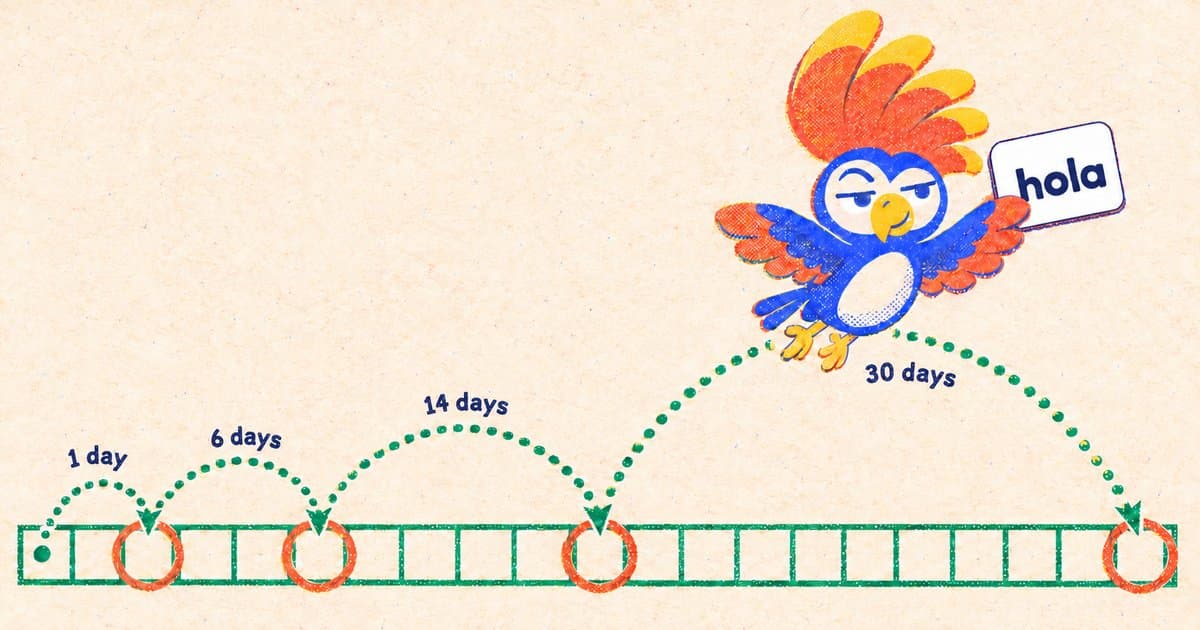
Lexora teaches about 1,000 everyday words in 61 languages, from CEFR level A1 to C2. A lesson shows you a word, then you say short sentences that use it, and speech recognition checks each word you said. Your phone's or browser's own speech recognition does the check. On iPhone, for languages Apple cannot recognize, such as Welsh, and in Brave and Firefox, your speech goes through Lexora's server to a speech provider. Icelandic has no speech check on iPhone or in Brave and Firefox, so there you use quiet mode, which builds each sentence from word tiles without speaking. Each word comes back for review with gaps of 1, 6, 14, 30, 60 and 150 days. Speaking is on the free plan, which gives 3 new words a day. Pro costs $12.99 a month or $59.99 a year.
Where it falls short: it has no conversation practice or tutor, you cannot add your own words, and it needs an internet connection. About Lexora has the full list of facts.
Speakly, for the most used words in sentences
Speakly teaches the 4,000 most used words of a language, in order of how often they come up. You write and say whole sentences from day one, voice recognition gives live feedback on your pronunciation, and spaced reviews bring words back. It has 12 courses, counting US and UK English separately. After a 7-day free trial it costs $9.99 a month or $47.99 a year. Where it falls short: it does not say whether there is a free plan after the trial, or what level the course reaches.
Lingvist, for saying the missing word
Lingvist teaches the most frequent words first, on sentence cards. You can say the answer instead of typing it, and speech recognition checks it. Course sizes vary, from about 3,100 words in Japanese to about 6,000 in German, across 16 languages, with spaced reviews. It costs $9.99 a month or $79.99 a year, with a 14-day free trial on the yearly plan. Where it falls short: there is no free plan, and you say one word at a time, not a whole sentence.
Grammobolica, for whole sentences from memory
Grammobolica calls itself a language gym for adults who studied a language before but cannot speak it. You pick a topic, get 10 sentences and translate each one out loud from your own language. Speech recognition grades you word by word, and a word only counts if it was hidden when you said it. Words from your drills go into an 8-stage review schedule, and a shadowing trainer adds 330 phrases. It teaches 10 languages from A1 to B1. The free plan has 2 drill sessions a day, and paid costs $6.99 a month or $34.99 a year. Where it falls short: it is iPhone only, stops at B1, and is built on grammar drills rather than a word course.
Glossika, for shadowing native speakers
Glossika trains you with sentences from real native speakers, for people who understand a language but freeze when speaking. In shadowing you speak along with the audio as it plays, matching its pace and tone, and the app analyzes your speech against the original. It does not say whether that means recognizing your words or comparing the sound. Spaced reviews bring sentences back, in 50+ languages. The free plan has ads and daily limits. Plus costs $19.99 a month or $129.99 a year for one language, and Pro costs $39.99 a month or $299.99 a year for all. Where it falls short: you repeat rather than recall, and the new iPhone app has a 1.8-star App Store rating. Reviewers prefer Glossika Legacy, which is still available.
Speechling, for feedback from a human coach
Speechling is a nonprofit. You hear a native speaker say a sentence, record yourself, and a human coach sends feedback on pronunciation, rhythm, grammar and word choice within 24 hours. You can also compare your voice with the native one side by side, and advanced learners answer questions or describe pictures. It teaches 10 languages with spaced reviews. The free plan has the whole course and up to 10 coaching sessions a month, except in English, French, Chinese and German. Unlimited costs from $19.99 a month. Where it falls short: feedback is not instant, and it does not publish a yearly price.
Clozemaster, for sentences after the basics
Clozemaster shows sentences with one word missing, sorted by how common the word is, for learners from A2 to C1. It has three modes: vocabulary, listening and speaking. Reviews come after 1, 10, 30 and 180 days, and Pro members can change those gaps. It teaches 50+ languages and is free to play with limits. Pro costs $12.99 a month or $79.99 a year. Where it falls short: it is not for beginners, and its own pages do not say what you say in speaking mode or whether it checks you.
Pimsleur, for audio lessons you answer out loud
Pimsleur's core is 30-minute audio lessons where you listen and answer out loud, so they work on a walk or in the car. Extras include flashcards and Voice Coach AI, which gives instant feedback on your pronunciation, plus an AI conversation partner for Spanish. It has 51 languages and one free lesson. One language costs $19.99 a month, and All Access costs $20.99 a month. Where it falls short: in the audio lessons you answer to yourself, the extras depend on the language, and it does not say whether it schedules reviews.
Babbel, for lessons with speech checks
Babbel's lessons are tailored to your native language. In speaking exercises you hear a word or phrase, then record yourself, and speech recognition says how closely you matched. It teaches 14 languages, up to C1 in European Spanish and B2 in German, Italian and French. One lesson is free. It costs $17.99 a month, $107.99 a year or $299.99 once. Where it falls short: you mostly repeat after audio, and speech recognition on the web works only in Chrome for most languages.
Duolingo, for free speaking exercises
Duolingo's speaking exercises have you repeat words, translate sentences out loud and answer in short dialogues, and the app writes out what it hears to check you. In its flashcards you say the translation from memory. Every course is free, and its biggest courses reach B2. Super costs $12.99 a month, and the US App Store lists yearly plans from $79.99 to $119.99. Where it falls short: Video Call and Roleplay need Max, and it does not say how it schedules reviews. See our Duolingo alternatives for more options.
Memrise, for native speaker videos and AI Buddies
Memrise teaches with videos of native speakers and lets you practice with AI Buddies for speaking and role-play. With Pronunciation Buddy you record yourself saying a word or phrase you just learned, and AI tells you if you got it right. Reviews follow a published schedule that starts with gaps of 4 and 12 hours. The free plan has limited lessons, ads and one speaking session a day. Pro costs $24.99 a month or $61.99 a year. Where it falls short: Pronunciation Buddy is for English speakers only, and Memrise gives conflicting counts of the languages it teaches.
Mondly, for short lessons and a chatbot
Mondly, owned by Pearson, has short topic lessons with voice recognition, a chatbot and AI conversations. It teaches 41 languages from A1 to B2. The free plan has weekly and monthly challenges, AI conversations and vocabulary review. The US App Store lists $15.90 a month or $74.90 a year. Where it falls short: the course stops at B2, and Mondly does not say whether its reviews are spaced.
Speak, for conversation with an AI tutor
Speak is built around speaking. A teacher on video introduces phrases, you repeat them until they come without thinking, and then you talk freely with the Speak Tutor, which rates your pronunciation, intonation and fluency. It teaches 6 languages to English speakers. After a 7-day free trial the US App Store lists $17.99 to $39.99 a month or $83.99 to $164.99 a year. Where it falls short: there is no free plan, and it does not say how far its courses go.
Why saying words out loud helps
In 2010 the psychologist Colin MacLeod and colleagues ran experiments where people studied lists of words, saying some aloud and reading others silently. People remembered the words they said aloud better than the ones they read silently. Even mouthing a word without sound helped. The researchers call this the production effect.
These were lab studies with words in people's own language, after a single study session. They are not a promise about learning a new language, but they are a good reason to say new words out loud instead of only reading them. Spacing your reviews helps too, and our spaced repetition schedule guide shows how the gaps add up.