The first 12 Polish greetings to learn
The most common Polish greetings are cześć (hi, informal) and dzień dobry (hello, polite). To say goodbye, use do widzenia with strangers and cześć with friends. Tap a greeting to hear it.
- CześćHi / bye · say: cheshch
- HejHi · say: hey
- Dzień dobryHello / good morning · say: jen DOH-brih
- Dobry wieczórGood evening · say: DOH-brih VYEH-choor
- Do widzeniaGoodbye · say: doh vee-DZEN-ya
- Do zobaczeniaSee you · say: doh zoh-bah-CHEN-ya
- Na razieSee you / bye for now · say: nah RAH-zheh
- DobranocGood night · say: doh-BRAH-nots
- Jak się masz?How are you? · say: yahk sheh MAHSH
- Co słychać?How's it going? / what's new? · say: tsoh SWIH-hahch
- Miło miNice to meet you · say: MEE-woh mee
- DziękujęThank you · say: jeng-KOO-yeh
Polish greetings change with the person in front of you more than English ones do. A friend gets cześć, a shop assistant gets dzień dobry, and the wrong one can sound rude. Below you will find 45 greetings and wishes with audio, the rule for formal and informal, birthday and holiday greetings, a practice visit to a friend's parents, flashcards, a speaking check and a quiz.
Formal or informal? The one rule to learn
With friends, family and children, use ty (informal singular you). With an adult you have just met, use pan for a man and pani for a woman. They work like a polite singular you and take the same verb forms as he and she.
- Jak się masz? How are you? (to a friend)
- Jak się pan ma? How are you? (to a man you don't know well)
- Jak się pani ma? How are you? (to a woman you don't know well)
Dzień dobry and do widzenia are polite choices. Cześć, hej and na razie are informal. Cześć is both hi and bye, so with friends one word covers the whole visit. For a mixed group, including a man and a woman together, use państwo. For a group of women, use panie, and for a group of men, use panowie.
Who suggests switching to ty? At work, usually the person in the higher position. In social settings, the older person often takes the lead. Traditional etiquette also gives a woman the lead when speaking with a man of similar age. Among peers, people often start with ty.
Who are you greeting?
Pick a person to see what to say. Tap the speaker to hear it.
- Dzień dobrysay: jen DOH-brih
- Dziękujęsay: jeng-KOO-yeh
- Do widzeniasay: doh vee-DZEN-ya
- Cześćsay: cheshch
- Hejsay: hey
- Co słychać?say: tsoh SWIH-hahch
- Na raziesay: nah RAH-zheh
- Dzień dobrysay: jen DOH-brih
- Jak się pan ma?say: yahk sheh pahn MAH
- Jak się pani ma?say: yahk sheh PAH-nee MAH
- Do widzeniasay: doh vee-DZEN-ya
- Cześćsay: cheshch
- Pasay: pah
- Dobry wieczórsay: DOH-brih VYEH-choor
- Dobranocsay: doh-BRAH-nots
How the greetings sound
Polish spelling is fairly regular, and some sounds change with the letters around them. These ten examples show how that works in greetings. Use the English respellings as a rough guide. In them, ng sounds like the end of sing, kh is the sound in loch, and ih is close to the vowel in sit.
Tap a letter to hear it
Each letter plays an example greeting.
Stress almost always falls on the second-to-last syllable: do wi-DZE-nia, dzię-KU-ję, do-BRA-noc. Long wishes follow the same rule word by word: wszyst-KIE-go naj-lep-SZE-go. For all the letters, see our list of basic Polish words.
Polish greetings by situation
Pick a group, tap the speaker to hear a greeting, and switch on Hide English to test yourself. The notes say when each one fits. Lexora's A1 course for Polish teaches the basics among them: cześć, do widzenia, witaj, proszę, dziękuję and przepraszam.
45 Polish greetings and wishes
- Cześćsay: cheshch
- Hejsay: hey
- Siemasay: SHYEH-mah
- Dzień dobrysay: jen DOH-brih
- Dobry wieczórsay: DOH-brih VYEH-choor
- Witajsay: VEE-tie
- Do widzeniasay: doh vee-DZEN-ya
- Do zobaczeniasay: doh zoh-bah-CHEN-ya
- Cześćsay: cheshch
- Na raziesay: nah RAH-zheh
- Pasay: pah
- Miłego dniasay: mee-WEH-goh DNYAH
- Dobranocsay: doh-BRAH-nots
- Jak się masz?say: yahk sheh MAHSH
- Jak się pan ma?say: yahk sheh pahn MAH
- Jak się pani ma?say: yahk sheh PAH-nee MAH
- Co słychać?say: tsoh SWIH-hahch
- Dobrze, dziękuję.say: DOHB-zheh, jeng-KOO-yeh
- Nieźle.say: NYEHZH-leh
- A ty?say: ah TIH
- Mam na imię …say: mahm nah EE-myeh
- Nazywam się …say: nah-ZIH-vahm sheh
- Jak masz na imię?say: yahk mahsh nah EE-myeh
- Jak się pan nazywa?say: yahk sheh pahn nah-ZIH-vah
- Miło misay: MEE-woh mee
- Bardzo mi miłosay: BAR-dzoh mee MEE-woh
- Proszęsay: PROH-sheh
- Dziękujęsay: jeng-KOO-yeh
- Dziękisay: JENG-kee
- Proszę bardzosay: PROH-sheh BAR-dzoh
- Przepraszamsay: psheh-PRAH-shahm
- Taksay: tahk
- Niesay: nyeh
- Wszystkiego najlepszegosay: fshihst-KYEH-goh nay-lep-SHEH-goh
- Wszystkiego najlepszego z okazji urodzinsay: fshihst-KYEH-goh nay-lep-SHEH-goh z oh-KAHZ-yee oo-ROH-jeen
- Wszystkiego najlepszego z okazji imieninsay: fshihst-KYEH-goh nay-lep-SHEH-goh z oh-KAHZ-yee ee-myeh-NEEN
- Sto latsay: stoh LAHT
- Wesołych Świątsay: veh-SOH-wikh SHFYONT
- Wesołych Świąt Bożego Narodzeniasay: veh-SOH-wikh SHFYONT boh-ZHEH-goh nah-roh-DZEN-ya
- Szczęśliwego nowego rokusay: shchehn-shlee-VEH-goh noh-VEH-goh ROH-koo
- Wesołych Świąt Wielkanocnychsay: veh-SOH-wikh SHFYONT vyel-kah-NOTS-nikh
- Wesołego Allelujasay: veh-soh-WEH-goh ah-leh-LOO-yah
- Powodzeniasay: poh-voh-DZEN-ya
- Smacznegosay: smahch-NEH-goh
- Na zdrowiesay: nah ZDROH-vyeh
Birthday, name day and holiday greetings in Polish
Birthdays and Sto lat
For a birthday, say wszystkiego najlepszego (all the best). People often sing Sto lat, which means "a hundred years". The song wishes the person a hundred years of life. You will hear it at name days, weddings and toasts too. Tap the first line to hear it.
Name days
Many Poles also celebrate their imieniny (ee-myeh-NEE-nih), their name day. Many Polish calendars list names next to dates. Some names appear on several dates. A common date for Anna's name day is 26 July. To wish someone a happy name day, say wszystkiego najlepszego z okazji imienin.
Christmas and New Year
For many Polish families the biggest moment of Christmas is Wigilia, which means Christmas Eve, 24 December, and also the supper that evening. Before the meal, families traditionally share opłatek, a thin white wafer. They break off pieces of each other's wafers and exchange good wishes. The short greeting for the season is Wesołych Świąt. The full one is Wesołych Świąt Bożego Narodzenia, and for the new year it is Szczęśliwego nowego roku.
Easter
At Easter you can say Wesołych Świąt Wielkanocnych or Wesołego Alleluja. On the Saturday before Easter, many families take small baskets of food to church to be blessed. On Easter Monday, people splash each other with water in a tradition called śmigus-dyngus.
Meet a friend's parents
On a visit to a Polish home, you may use both informal and polite greetings. You greet your friend one way and their parents another. Pick the right reply at each step.
Sunday lunch at Kasia's
- Cześć! Jak się masz?Hi! How are you?
Practice with flashcards
You remember greetings by pulling them from memory, not by reading a list once. Say each one out loud before you flip the card, then be honest about whether you knew it.
Eight greetings, one round
Say them out loud
You know a greeting when you can say it. Pick one, listen, then press the microphone and say it. Your browser shows you what it heard.
Speaking check
Works in Chrome, Edge and Safari. Your browser does the listening, and nothing is sent to Lexora.
Quick quiz
Seven questions on the greetings above. A wrong answer is useful. It shows you what to review tomorrow.
How many do you remember?
The catch with time of day and who you greet
Two things decide which Polish greeting fits: the time of day and the person. English speakers trip over both, because Polish splits them differently.
- Dzień dobry works in the morning and afternoon. Polish has no separate everyday good afternoon. In the evening, you can say dobry wieczór. There is no set time to switch.
- Dobranoc is a farewell at night or a wish before bed.
- Cześć to an older stranger, a shop assistant or your friend's parents can sound rude or too familiar. With them, say dzień dobry or dobry wieczór when you arrive and do widzenia when you leave.
Pan and pani take the verb form used with he and she. Polish nouns change form too. After z okazji (on the occasion of), use imienin, the genitive form of imieniny. Our guide is Polish hard to learn? explains these endings and what makes Polish easier than it looks.
What to learn next
Greetings are part of the A1 level, the level for complete beginners. Here is the rest of the path in Lexora, from your first words up to the abstract vocabulary of C2.
Words at each level
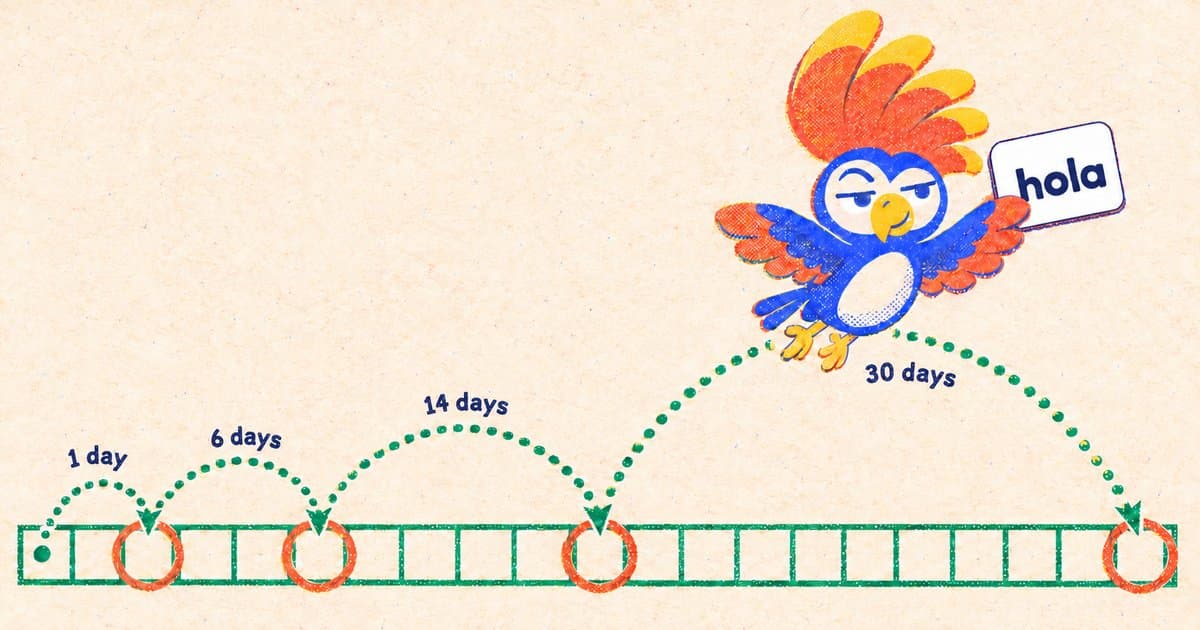
Next, learn numbers, food and everyday words from our list of basic Polish words. The fastest way to keep them is a few minutes a day. Say each word in a sentence, and review it just before you would forget it. Our guide to the spaced repetition schedule explains why the gaps are 1, 6, 14, 30, 60 and 150 days.