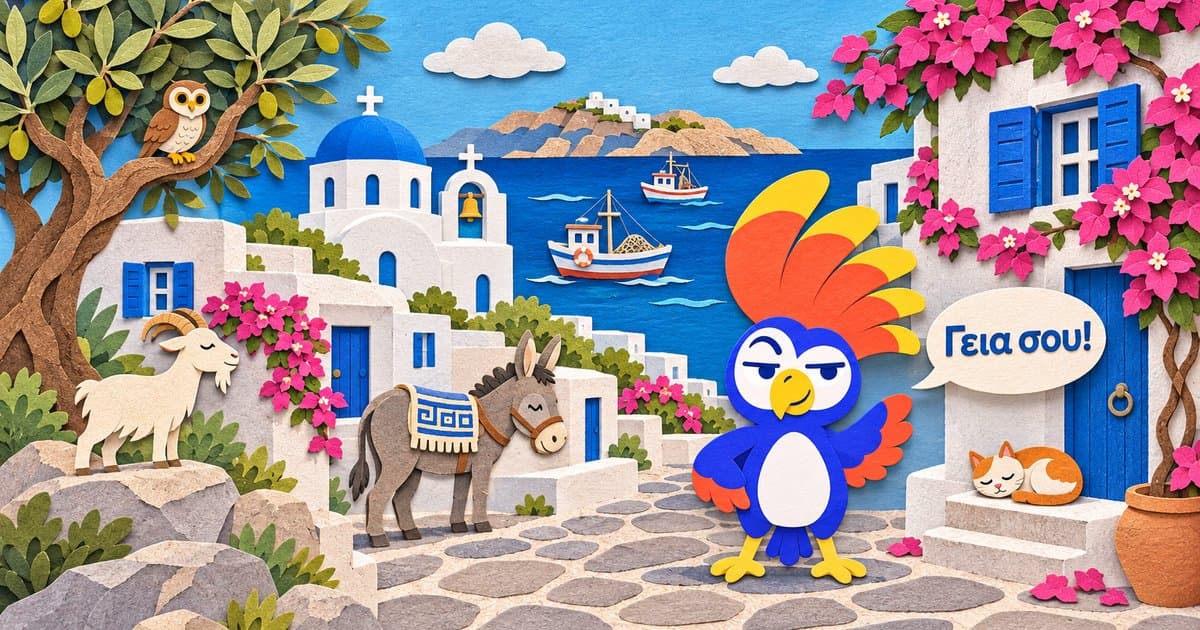
The first 12 animals in Greek to learn
These are the animals in Greek you will use most: pets, farm animals and a few wild ones. Each one comes with its article (ο, η or το, all meaning "the"), so you can learn the noun's gender as you go. Tap a word to hear it.
- ο σκύλοςDog · say: oh SKEE-lohs
- η γάταCat · say: ee GHAH-tah
- το πουλίBird · say: toh poo-LEE
- το άλογοHorse · say: toh AH-loh-ghoh
- η αγελάδαCow · say: ee ah-yeh-LAH-dhah
- το πρόβατοSheep · say: toh PROH-vah-toh
- το γουρούνιPig · say: toh ghoo-ROO-nee
- το κουνέλιRabbit · say: toh koo-NEH-lee
- το ψάριFish · say: toh PSAH-ree
- το ποντίκιMouse · say: toh pon-DEE-kee
- το λιοντάριLion · say: toh lyohn-DAH-ree
- η αρκούδαBear · say: ee ar-KOO-dhah
The word for animal itself is το ζώο (ZOH-oh), and animals is τα ζώα. You already know the root from zoo. Below are 50 Greek animal names in six groups, each with audio and a simple respelling. After the list you can practice them with flashcards, a speaking check and a quiz.
How Greek sounds
The Greek alphabet looks strange at first, but reading it is easier than it looks. Some letters change sound depending on what comes next. Several letters look like English ones and sound different, and a few sounds are written with two letters. These fourteen will help you read the animal names on this page.
Tap a letter to hear it
Each letter plays an example animal.
Greek also shows you where the stress goes. Words of two or more syllables usually have a small accent mark, the τόνος (TOH-nohs), on the stressed vowel. If two letters spell that vowel, the mark goes on the second, as in η αλεπού. Compare ο σκύλος (SKEE-lohs) and το σκυλί (skee-LEE). Both mean dog, but the stress sits in a different place, and the mark tells you where. Words written in capital letters, as on signs, usually leave the mark out.
Greek animal names by group
Pick a group and tap the speaker to hear a word. To test yourself, switch on Hide English. In the respellings, gh is kh with your voice on, dh is th as in this, kh is ch as in loch, and hy is the sound at the start of huge. Capitals mark the stressed syllable.
50 animals in Greek
- ο σκύλοςsay: oh SKEE-lohs
- το σκυλίsay: toh skee-LEE
- το κουτάβιsay: toh koo-TAH-vee
- η γάταsay: ee GHAH-tah
- το γατάκιsay: toh ghah-TAH-kee
- το κουνέλιsay: toh koo-NEH-lee
- το ψάριsay: toh PSAH-ree
- ο παπαγάλοςsay: oh pah-pah-GHAH-lohs
- η χελώναsay: ee hyeh-LOH-nah
- το άλογοsay: toh AH-loh-ghoh
- η αγελάδαsay: ee ah-yeh-LAH-dhah
- το μοσχάριsay: toh mohs-KHAH-ree
- το πρόβατοsay: toh PROH-vah-toh
- το αρνίsay: toh ar-NEE
- η κατσίκαsay: ee kah-TSEE-kah
- το γουρούνιsay: toh ghoo-ROO-nee
- η κόταsay: ee KOH-tah
- ο κόκοραςsay: oh KOH-koh-rahs
- το λιοντάριsay: toh lyohn-DAH-ree
- ο ελέφανταςsay: oh eh-LEH-fahn-dahs
- η αρκούδαsay: ee ar-KOO-dhah
- ο λύκοςsay: oh LEE-kohs
- η αλεπούsay: ee ah-leh-POO
- το ελάφιsay: toh eh-LAH-fee
- η μαϊμούsay: ee mah-ee-MOO
- η καμηλοπάρδαληsay: ee kah-mee-loh-PAR-dhah-lee
- ο ιπποπόταμοςsay: oh ee-poh-POH-tah-mohs
- το πουλίsay: toh poo-LEE
- ο αετόςsay: oh ah-eh-TOHS
- η κουκουβάγιαsay: ee koo-koo-VAH-yah
- το περιστέριsay: toh peh-ree-STEH-ree
- το χελιδόνιsay: toh hyeh-lee-DHOH-nee
- ο γλάροςsay: oh GHLAH-rohs
- η πάπιαsay: ee PAHP-hyah
- το δελφίνιsay: toh dhel-FEE-nee
- η φάλαιναsay: ee FAH-leh-nah
- ο καρχαρίαςsay: oh kar-khah-REE-ahs
- το χταπόδιsay: toh khtah-POH-dhee
- το καβούριsay: toh kah-VOO-ree
- η μέδουσαsay: ee MEH-dhoo-sah
- ο μπακαλιάροςsay: oh bah-kah-LYAH-rohs
- το ποντίκιsay: toh pon-DEE-kee
- η μέλισσαsay: ee MEH-lee-sah
- η πεταλούδαsay: ee peh-tah-LOO-dhah
- το σκαθάριsay: toh skah-THAH-ree
- η αράχνηsay: ee ah-RAKH-nee
- το τζιτζίκιsay: toh dzee-DZEE-kee
- το φίδιsay: toh FEE-dhee
- η σαύραsay: ee SAHV-rah
- ο βάτραχοςsay: oh VAH-trah-khohs
Eight of these are in Lexora's A1 Greek course: the dog, cat, bird, horse, cow, sheep, pig and rabbit. The app teaches each one in spoken sentences and brings it back for review just before you would forget it.
Practice with flashcards
Words stick when you pull them from memory, not when you read a list once. Try this short round with the eight course animals. Say the word out loud, with its article, before you flip the card.
Eight animals, one round
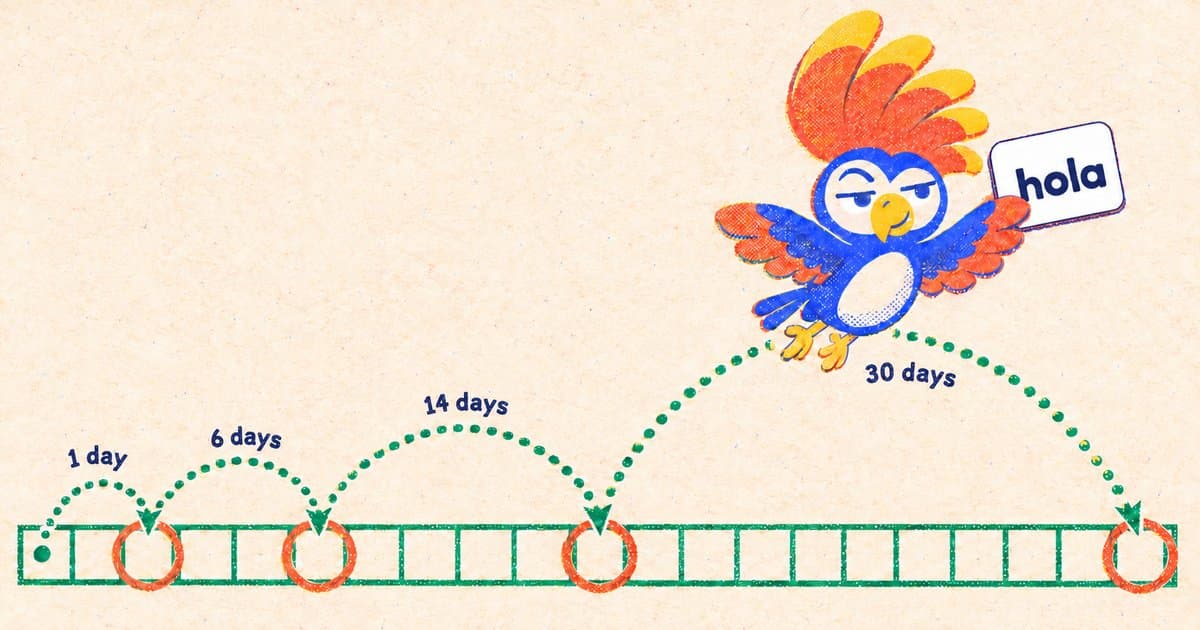
One round is a start. To keep the words for good, the cards need to come back after a day, then a week, then longer. If you want an app to do that for you, see our list of spaced repetition apps.
Say them out loud
You know a word when you can say it. Pick an animal, listen, then press the microphone and say it with its article. Your browser will show you what it heard.
Speaking check
Works in Chrome, Edge and Safari. Lexora does not record your voice or receive it.
What animals say in Greek
Animals make the same noises everywhere, but every language writes them down a little differently. Greek children grow up with these. Hold the vowel in μπεε.
Animal sounds in Greek
- γαβ γαβWoof (dog) · say: GHAHV GHAHV
- νιάουMeow (cat) · say: NYAH-oo
- κικιρίκουCock-a-doodle-doo (rooster) · say: kee-kee-REE-koo
- μπεεBaa (sheep) · say: BEH
- μουMoo (cow) · say: MOO
- Ο σκύλος γαβγίζει.The dog barks. · say: oh SKEE-lohs ghahv-YEE-zee
- Η γάτα νιαουρίζει.The cat meows. · say: ee GHAH-tah nyah-oo-REE-zee
Animals in the Greek myths
A few animal words carry stories that are thousands of years old.
- Η κουκουβάγια (owl). The little owl was the bird of Athena, the goddess of wisdom, and the symbol of Athens. It is still on the Greek 1 euro coin. The old saying "owls to Athens" meant bringing something where there is plenty already.
- Η αράχνη (spider). In the myth, Arachne challenged Athena to a weaving contest, and the goddess turned her into a spider. The English word arachnid has the same Greek root.
- Η μέδουσα (jellyfish). Medusa was the monster with snakes for hair. The Greek word for the jellyfish comes from her name, through French.
Quick quiz
Seven questions on the animals above. Don't worry about mistakes. A word you miss now tells you what to review tomorrow.
How many do you remember?
Why every animal has ο, η or το
Every Greek noun has a gender: masculine, feminine or neuter. The noun's gender can differ from the animal's sex. Η γάτα is feminine, ο γάτος specifically means a male cat, and το σκυλί is neuter and can refer to a dog of either sex. Learn the singular article with the word so you remember its gender.
Here are three examples where both the article and the noun ending change in the plural.
- ο σκύλος → οι σκύλοι (the dog, the dogs)
- η γάτα → οι γάτες (the cat, the cats)
- το άλογο → τα άλογα (the horse, the horses)
Don't try to learn every pattern at once. Learn each animal with its article, and pick up the plurals by hearing and saying whole sentences. That is how Lexora teaches every word.
What to learn next
Animals are one topic at the A1 level, the level for complete beginners. Here is the rest of the path in Lexora, up to the fluent, abstract vocabulary of C2.
Words at each level
The fastest way through it is a few minutes a day. Learn a handful of new words, say them in sentences, and review each one just before you would forget it. Our guide to the spaced repetition schedule explains why the gaps are 1, 6, 14, 30, 60 and 150 days.